The Point
03
The Bridge They Want to Tear Down, and the Bombs Still Ticking
This week Wentworth faces two tests of memory: whether we honour what happened at Bondi, and whether we've learned anything from it. The answers, so far, are not reassuring.
Saturday Morning Edition – Elizabeth Bay to Clovelly
The PointContents
This Week
01
Wentworth Local
Waverley Council Wants to Remove the Bondi Attack Memorial Bridge
02
National Security
ISIS-Linked Women and Children Are Returning to Australia Within Days
03
Cost of Living
Australia's Inflation Problem Is Structural, Not a Blip
04
Wentworth Local
A Heritage Oxford Street Pub Was Gutted Before Anyone Asked Permission
05
Wentworth Local
Local Greens Oppose an Anti-Semitism Summit in Their Own Electorate
06
Community
Record Crowd at Jewish Veterans' ANZAC Service Signals Something Worth Noticing
07
National Security
The AUKUS Submarine Deal Has Cracks — and Pretending Otherwise Is Dangerous
08
National Security
Palantir Has 42 Million Australian Data Points and Government Hasn't Asked If That's Wise
The PointPhotograph of the Week
The PointBeach & Surf
Saturday · Bondi · 06:00 AEST
7/10
PLAYFUL
PLAYFUL
Saturday morning at Bondi should be worth getting up for. A 0.9 metre swell arriving from the east every 5.8 seconds, with a light 3-knot wind blowing offshore — from the land out to sea, which smooths the face of each wave — means the water will be organised and reasonably clean. At 21.8 degrees it's still comfortable without a wetsuit, though the 14-degree air at dawn will make that first step in feel brisk.
This morning, in numbers
Swell
0.9 m 5.8s · E
Wind
3 kt W · OFFSHORE
Water temp
21.8 °C
Air temp
14.7 °C · 06:00 aest
The Point
01 · Wentworth Local
Wentworth Local
Waverley Council Wants to Remove the Bondi Attack Memorial Bridge
MSN – 25 April 2026
5
Months since the attack
At a Waverley Council meeting this week, a proposal to demolish the bridge that became a spontaneous memorial site after the 14 December 2025 Bondi attack met organised local opposition. Residents showed up to argue that the structure carries meaning the council has no right to simply bulldoze away. The attack killed fifteen people and sent 41 others to hospital, and the bridge was covered in flowers, photos, and handwritten notes within hours. Less than five months on, the bureaucratic instinct is apparently to clear the site and return it to functionality. The community's instinct, clearly, is otherwise.
James's Take
There's something revealing about a council that can't process a development application before a heritage pub gets gutted — more on that below — but moves efficiently to tidy away a memorial that inconveniences the footpath. Grief doesn't run on a council schedule. The residents who showed up this week were right to push back. Some things need to stay visible for longer than the news cycle.
01
The Point
02 · National Security
National Security
ISIS-Linked Women and Children Are Returning to Australia Within Days
Nine News – 26 April 2026
2019
Year IS caliphate collapsed
A group of women with alleged ties to Islamic State, along with their children, have secured flights back to Australia from Syria. The government confirmed the returns are imminent. The women left Australia to join or support the Islamic State project in Syria; some have been held in camps there for years. The legal and security questions are genuinely complex: the children were mostly born overseas and hold Australian citizenship by descent. What happens to the adults — in terms of prosecution, monitoring, deradicalisation — is where the serious work begins, and where the government has said very little.
James's Take
The steel-man here is real: these children are Australian citizens who made no choice, and leaving them in Syrian detention indefinitely is indefensible. That argument wins. The harder question is the adults, and the government owes the public a clear answer on prosecution pathways, monitoring arrangements, and deradicalisation resourcing — not a vague assurance that agencies are across it. Silence on process is not reassurance; it's an invitation for the worst assumptions to fill the gap.
02
The Point
03 · Cost of Living
Cost of Living
Australia's Inflation Problem Is Structural, Not a Blip
AFR Policy – 23 April 2026
3
Compounding inflation pressures
The AFR's economics team is warning that Australia faces a triple squeeze: an economy still running too hot, energy costs that remain elevated well above pre-crisis levels, and the early conditions for a wage-price spiral as workers chase real wages lost to inflation over the past three years. The problem is not that any one factor is catastrophic in isolation; it is that all three are operating simultaneously. The Reserve Bank has limited room to move given household debt levels, and fiscal policy — government spending — has been working against monetary policy rather than with it.
James's Take
The root cause isn't mysterious. Government spending has been persistently expansionary while the RBA tries to cool demand — that's two hands pulling opposite directions on the same rope. Add energy costs that successive governments failed to structurally address, and an immigration intake that supercharged housing demand without matching supply. The solutions aren't painless, which is why no one in Canberra is saying them plainly.
3
03
The Point
04 · Wentworth Local
Wentworth Local
A Heritage Oxford Street Pub Was Gutted Before Anyone Asked Permission
SMH NSW – 22 April 2026
0
DAs received before demolition
A heritage-listed hotel on Oxford Street has had its interior demolished — stripped back before Woollahra Council had even received a development application, let alone assessed one. The building is listed precisely because its interior fabric is considered part of Sydney's architectural and social history. The demolition appears to have been carried out ahead of any approval in what heritage advocates describe as a fait accompli strategy: remove what you want gone, then dare the council to order it put back. Woollahra Council says it is investigating.
James's Take
This is a well-documented pattern. Developers calculate that the fine for unauthorised demolition is smaller than the planning battle they'd lose, so they act first. The fix is straightforward: make the penalties genuinely punitive and require full reinstatement at the developer's cost. Until councils are prepared to do that, heritage listing is a suggestion, not a constraint. Woollahra should make this the case that changes the calculus.
04
The Point
05 · Wentworth Local
Wentworth Local
Local Greens Oppose an Anti-Semitism Summit in Their Own Electorate
Herald Sun – 26 April 2026
16%
Jewish population in Wentworth
The Greens in Bondi have come out against holding an anti-semitism summit in the area, despite the electorate of Wentworth having the highest concentration of Jewish Australians in the country — around 16 per cent of the population — and despite the December 2025 Bondi attack having targeted a Jewish-majority area. The stated objection is not entirely clear from reports, but the optics are stark: opposing a summit on anti-semitism, in Bondi, five months after the deadliest attack on the area in living memory.
James's Take
Popper's paradox of tolerance has a clear implication here: a tolerant society cannot be neutral about incitement and targeted hatred. Opposing a summit on anti-semitism is not a neutral act — especially in this postcode, five months after December. The Greens are entitled to disagree with the summit's scope or format. But the blanket opposition, here of all places, demands a far more coherent public explanation than has been offered.
05
The Point
06 · Community
Community
Record Crowd at Jewish Veterans' ANZAC Service Signals Something Worth Noticing
Australian Jewish News – 25 April 2026
300
Attendees — a record
Nearly 300 people attended the VAJEX ANZAC Day commemoration at Glen Eira this year — a record attendance. VAJEX is the association of Jewish ex-service men and women in Australia. Speakers used the occasion to address rising anti-semitism directly, drawing an explicit connection between the sacrifice of Jewish Australians in uniform across generations and the targeted hostility the community now faces. ANZAC Day, for this community, carried extra weight in 2026.
James's Take
Jewish Australians have served in every conflict this country has fought. That's not a talking point — it's a matter of documented record going back to Gallipoli. The record crowd this year isn't incidental. When a community feels targeted, it tends to draw closer to the institutions that affirm its belonging. ANZAC Day is one of those institutions. The rest of us should take note of what we're being shown.
06
The Point
07 · National Security
National Security
The AUKUS Submarine Deal Has Cracks — and Pretending Otherwise Is Dangerous
Nine News – 25 April 2026
$368B
AUKUS submarine cost
A new report warns that Australia's $368 billion AUKUS nuclear submarine programme is showing structural stress: funding is under pressure, political commitment in both Canberra and London is wavering, and the industrial base needed to build and maintain nuclear-capable vessels does not yet exist at the required scale. British MPs are among those sounding the alarm, noting that the UK's own submarine programme is stretched. The first Australian-crewed vessel under AUKUS was already years away. Further slippage pushes the capability gap out further at precisely the moment the Indo-Pacific security environment is tightening.
James's Take
Mearsheimer's point is blunt: a country whose deterrent capability exists only on paper is a country whose foreign policy is partly written elsewhere. $368 billion committed in principle means nothing if the yards, the workforce, and the political will aren't there to back it. The government needs to say plainly what is on track, what is not, and what the contingency is — not because panic helps, but because sustained public commitment requires sustained public honesty.
$368B
07
The Point
08 · National Security
National Security
Palantir Has 42 Million Australian Data Points and Government Hasn't Asked If That's Wise
Crikey – 27 April 2026
42M
Australian data points analysed
Crikey's investigation reveals that the Australian Criminal Intelligence Commission used Palantir's Gotham platform to analyse 42 million data points on Australians — calls, messages, police records — under $60 million worth of federal contracts. The government also holds a stake in Palantir worth more than $160 million. What's absent from the public record is any documented assessment of whether concentrating that volume of citizen data with a US-listed, Trump-aligned private company constitutes a responsible investment of sovereign intelligence capacity. The question has apparently not been formally asked.
James's Take
The issue isn't whether Palantir's tools work — by most accounts they do. The issue is data sovereignty. Feeding 42 million Australian data points into infrastructure owned and operated by a foreign-listed company, without a published risk framework, is exactly the kind of decision that looks fine until it doesn't. Government's job here — one of Friedman's four core functions — is to protect citizens. Outsourcing the architecture of that protection without scrutiny is an abdication, not a procurement decision.
08
The PointWhat I'm Reading
Recommended This Week
Three things worth your time.
The Open Society and Its Enemies – Karl Popper
The week's events — an anti-semitism summit opposed in Bondi, a deradicalisation question ducked by government — make Popper's central argument about the limits of tolerance more urgent than it has any right to be in 2026. Read the first volume if you haven't.
The Tragedy of Great Power Politics – John Mearsheimer
With AUKUS showing cracks and 42 million data points sitting on foreign servers, Mearsheimer's framework for why material capability is the floor under all foreign policy is the cleanest lens available. Chapter two alone justifies the read.
Heritage Crime and the Planning System – NSW Heritage Office guidelines (public document)
After the Oxford Street pub story, it's worth understanding what the rules actually say — and where the penalty regime is too weak to deter exactly the behaviour we saw this week. The gap between the law on paper and developers' actual calculus is instructive.
The PointQuote of the Week
“
Feeding 42 million Australian data points into infrastructure owned by a foreign-listed company, without a published risk framework, is exactly the kind of decision that looks fine until it doesn't.
The Point — Issue 03
See you Saturday. The swell is running east and the wind doesn't know what day it is.
The Point is free. If something mattered to you, forward it to a neighbour. If you disagree, write to me at hello@jameskell.au. I read every reply.
Subscribe – free, every Saturday
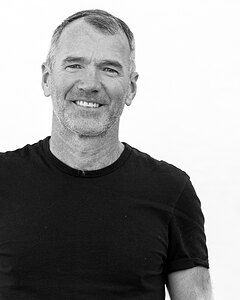
James Kell
Publisher · Bondi