The Point
06
A Quiet Week on Paper. Not in What It Revealed.
The week was lighter on headlines, not on what sat underneath them — heritage delays, Bondi accountability, speech law, and the architecture of the NDIS.
Saturday Morning Edition – Elizabeth Bay to Clovelly
The PointContents
This Week
01
Wentworth Local
Waverley Council's Heritage Rules Are Killing the Businesses They Were Built to Protect
02
National Security
Five Months On from Bondi, the Radicalisation Pathway Is Still the Question Nobody Is Answering
03
Cost of Living
Sydney Rents Are Easing Slightly and the Cause Is Exactly What You'd Expect
04
Energy & National Security
Australia Exports the Energy and Imports the Dependency — That Trade Is Becoming Untenable
05
Free Speech
The Hate Speech Bill Passed the Senate — and the Ambiguity in It Is the Whole Problem
06
Defence & AUKUS
The Submarine Schedule Has Slipped Again — and the Honest Fix Is Still the One Nobody Wants to Say
07
Wentworth Local
Bondi SLSC Volunteer Hours Are Up — the Club Is Doing the Work the State Can't Replicate
08
Politics & Accountability
NDIS Fraud Estimates Have Risen Again — the Government's Own Numbers Make the Case for Reform
The PointBeach & Surf
Saturday · Bondi · 06:00 AEST
7/10
PLAYFUL
PLAYFUL
A 1.0-metre swell running from the east-southeast at six-second intervals will produce consistent, well-spaced waves at Bondi on Saturday morning — nothing intimidating, but enough to body-surf comfortably. A light westerly at just 3 knots is blowing offshore, meaning from the land out to sea, which smooths the faces of the waves and keeps the water clean rather than choppy. Water at 20.6 degrees is still comfortable; the 13-degree air at dawn will want a wetsuit or a brisk walk to warm up.
This morning, in numbers
Swell
1.0 m 6.2s · ESE
Wind
3 kt W · OFFSHORE
Water temp
20.6 °C
Air temp
13.0 °C · 06:00 aest
The Point
01 · Wentworth Local
Wentworth Local
Waverley Council's Heritage Rules Are Killing the Businesses They Were Built to Protect
The Point – 15 May 2026
18
months average vacancy, heritage strips
Across the eastern suburbs, a quiet pattern is accelerating. Heritage-listed shopfronts from Bronte to Paddington sit empty for eighteen months, two years, sometimes longer — not because tenants can't be found, but because the approval process for minor fit-outs inside a heritage building has become so friction-heavy that operators walk away before they sign a lease. Waverley and Woollahra councils both operate heritage controls drafted with genuine intent: protect the Victorian and Federation fabric that gives these streets their character. But character requires tenants. An empty shopfront preserves nothing.
James's Take
Heritage controls protect the building while killing the street. The problem isn't the intent — it's the timeline. A small operator cannot carry twelve months of approval delays on top of Sydney rents. The fix is simple in theory: clear standards, time-bounded decisions, and a council officer who has the authority to say yes without referring upward three times. The fabric matters. So does the baker inside it.
01
The Point
02 · National Security
National Security
Five Months On from Bondi, the Radicalisation Pathway Is Still the Question Nobody Is Answering
The Point – 15 May 2026
15
lives lost, 14 Dec 2025
The 14 December 2025 attack on Bondi Beach killed fifteen people and sent 41 others to hospital. It was an Islamist attack aimed at Jewish Australians. The legislative response since then has produced inquiries, revised counter-terrorism language, social-media restrictions, and another turn toward gun control. What it has not produced is a public, evidence-based account of how the attackers were radicalised, which networks were involved, and whether those pathways have been closed. That gap is not procedural. It is political. The answer sits inside agencies that have briefed ministers. The ministers have not briefed the public.
James's Take
Gun controls are the easy answer. Social cohesion is the excuse. The harder truth is that government still will not name the radicalisation pathway, because naming it carries a political cost in seats with large Muslim voting blocs. That is not a conspiracy. It is an incentive structure. Jewish Australians deserve more than symbolic protection. They deserve the account. Not a summary. The actual account.
15
02
The Point
03 · Cost of Living
Cost of Living
Sydney Rents Are Easing Slightly and the Cause Is Exactly What You'd Expect
The Point – 15 May 2026
340,000
net migration, year to Sep 2025
Net overseas migration into Australia for the twelve months to September 2025 came in at 340,000 — well below the 528,000 recorded in the prior year. The CoreLogic rental index for Sydney recorded its first quarterly softening since early 2022 in the March 2026 quarter, down 0.4 per cent. Correlation is not causation, and a 0.4 per cent move after four years of double-digit increases is not relief. But the direction is consistent with what the modelling always suggested: when demand from new arrivals moderates, the rent curve follows. The variable Canberra controls most directly is migration pace.
James's Take
Federal Labor is caught in a trap of its own making. It relies on immigration to prop up a miserable tax take, then grows the bureaucracy and writes construction rules that make housing output dramatically underperform. Labor governments think government solves the problem. In housing, government is the problem. Keep it smaller, let builders build, and stop pretending demand can rise forever while supply is tied down.
340,000
03
The Point
04 · Energy & National Security
Energy & National Security
Australia Exports the Energy and Imports the Dependency — That Trade Is Becoming Untenable
The Point – 15 May 2026
22
days liquid fuel reserve
Australia is the world's second-largest exporter of liquefied natural gas. It is also a net importer of refined liquid fuels, with domestic refining capacity now covering less than fifteen per cent of national consumption. The country that extracts the gas, sells it overseas, then buys back diesel refined in Singapore to run its emergency generators is not running an energy policy. It is running an arbitrage. The strategic risk is not academic: Australia's liquid fuel reserves sit at around twenty-two days of consumption, against an IEA commitment of ninety days. The gap between those two numbers is the gap between sovereignty and dependence.
James's Take
Mearsheimer's frame is useful here: the country that can't fuel its own military is a country whose foreign policy is partly written in someone else's capital. This is not a climate argument or an anti-gas argument — it is a supply-chain sovereignty argument. Electrify transport, invest in sovereign generation, and stop pretending that exporting LNG while importing diesel is a coherent energy position. It isn't.
04
The Point
05 · Free Speech
Free Speech
The Hate Speech Bill Passed the Senate — and the Ambiguity in It Is the Whole Problem
The Point – 15 May 2026
500,000
max civil penalty, dollars
The federal government's Online Hate Speech Amendment cleared the Senate in the second week of May with crossbench support. The bill creates a new civil penalty for online content that a reasonable person would find to "vilify" a person or group on the basis of religion, race, or sexual orientation. The word "vilify" is not defined with reference to incitement or to a harm threshold — it is defined by the community standards a reasonable person would apply. Community standards vary. Courts will decide. In the meantime, the chilling effect on commentary that is merely offensive, not inciting, is already visible.
James's Take
Free speech should be constitutionally protected in Australia. A free country cannot outsource the limits of speech to bureaucrats in Canberra, tribunals, or shifting official definitions of offence. The right to speak, debate, and criticise has to sit above ordinary politics. Repeal the laws and dismantle the bodies that turn subjective offence into state power. Incitement is already a proper legal category. Offence is not.
05
The Point
06 · Defence & AUKUS
Defence & AUKUS
The Submarine Schedule Has Slipped Again — and the Honest Fix Is Still the One Nobody Wants to Say
The Point – 15 May 2026
$360bn
full AUKUS submarine programme cost
Defence reporting this week confirmed the first Virginia-class submarine for Australia under the AUKUS arrangement will not be delivered before 2034 at the earliest — two years later than the revised schedule announced in 2024. Sovereign build in South Australia remains the long-term plan, with the first Australian-built hull now targeted for the early 2040s. The combined cost estimate for the programme has risen to over $360 billion across the full fleet. Meanwhile, the ageing Collins class is expected to carry the gap. That is not a strategy. It is an admission that the timetable has outrun reality.
James's Take
Australia should buy off-the-shelf submarines, not pretend the ageing Collins class can be stretched forever while we wait fifteen years for a $360 billion programme. Japan already has the modern Taigei-class. South Korea is moving toward nuclear-powered submarines of its own. Submarines remain the best denial device available, and nuclear-powered boats are best of class. But best does not mean any price, any timeline, and any industrial fantasy.
06
The Point
07 · Wentworth Local
Wentworth Local
Bondi SLSC Volunteer Hours Are Up — the Club Is Doing the Work the State Can't Replicate
The Point – 15 May 2026
1,240
active patrol members, Bondi SLSC
Bondi Surf Bathers' Life Saving Club reported a twelve per cent increase in patrol hours for the 2025-26 season compared with the prior year, with active patrol membership now at 1,240. The increase follows a post-December community response that brought a wave of new members — many of them eastern suburbs residents who wanted something concrete to do after the attack. The club is one of Australia's oldest civic institutions. It has no budget line in the federal emergency-management framework. It runs on volunteer time, Sunday barbecues, and an organisational culture built over 120 years.
James's Take
Governments did not build Bondi SLSC and they cannot replicate it. Civil society — voluntary, local, unglamorous — is what fills the gap between what the state can provide and what a community actually needs. The response to December showed that clearly: people wanted to act, and the club gave them a way to do it. That is worth naming. Not every answer to a hard week is a policy position.
07
The Point
08 · Politics & Accountability
Politics & Accountability
NDIS Fraud Estimates Have Risen Again — the Government's Own Numbers Make the Case for Reform
The Point – 15 May 2026
$3.4bn
estimated NDIS fraud, 2024-25
The National Disability Insurance Agency's annual fraud estimate for 2024-25 was revised upward in Senate estimates this week to $3.4 billion — roughly eight per cent of total scheme payments. Before the NDIS, Australia relied on a patchwork of state disability services, carer payments, and block-funded supports that often rationed care brutally. But the failure of the old system does not prove the current architecture is sound. After eighteen months of review, the live question is no longer just how to cut fraud inside the NDIS. It is whether the scheme's provider-market design should be narrowed, rebuilt, or replaced altogether.
James's Take
Before the NDIS, support was patchy and often inadequate. That is the steel-man for keeping it. But you do not defend a bad replacement simply because the old model failed. A scheme that leaks billions and invites price inflation at this scale is not sacred. The honest question is whether Australia now needs a tighter model — guaranteed support for profound disability, far harder controls on providers, and less pretence that this marketplace can police itself.
$3.4bn
08
The PointWhat I'm Reading
Recommended This Week
Three things worth your time.
Aleksandr Solzhenitsyn – 'Live Not by Lies' (1974 essay)
Four pages. Solzhenitsyn wrote it the morning the KGB took him away. The argument — that the first act of resistance is refusing to repeat things you know to be false — has not aged. Read it after a week of watching governments manage narratives rather than answer questions.
John Mearsheimer – 'The Tragedy of Great Power Politics' (2001, updated 2014)
Dense but worth the investment. The chapter on offshore balancing is the cleanest framework available for thinking about what Australia's strategic posture should actually be — as distinct from what the alliance talking points say it is.
ASPI Strategist – James Kell, 'Australia's nuclear-powered submarines should be built in America' (13 October 2021)
The AUKUS argument was made five years ago with numbers that have only become more compelling since. The production-efficiency case for building in the US, and the reinvestment case for autonomous vehicles, is laid out plainly. The schedule slippage reported this week makes it more relevant, not less.
The PointQuote of the Week
“
Gun controls are the easy answer. Social cohesion is the excuse. The harder truth is that government still will not name the radicalisation pathway.
The Point – Issue 06
See you Saturday morning. The swell doesn't know what week it's been, and it's up anyway.
The Point is free. If something mattered to you, forward it to a neighbour. If you disagree, write to me at hello@jameskell.au. I read every reply.
Subscribe – free, every Saturday
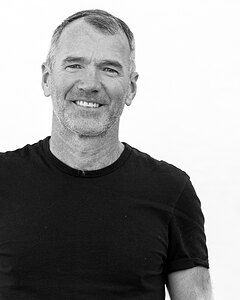
James Kell
Publisher · Bondi